- PG-13
- 1h 31m
- Directed by
-
- Rich Lee
- Novel
- H. G. Wells
- Premiered
- July 29, 2025
- Language
-
- English
- Status
- Released
- Country
-
- United States of America
War of the Worlds
- Production
-
- Universal Pictures
- Bazelevs
- Patrick Aiello Productions
Spoiler
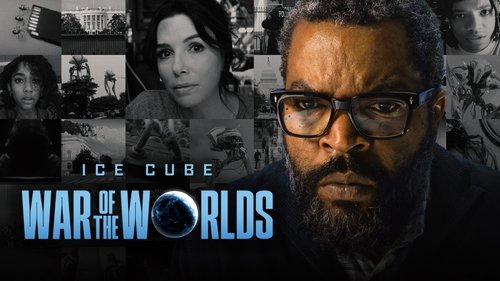
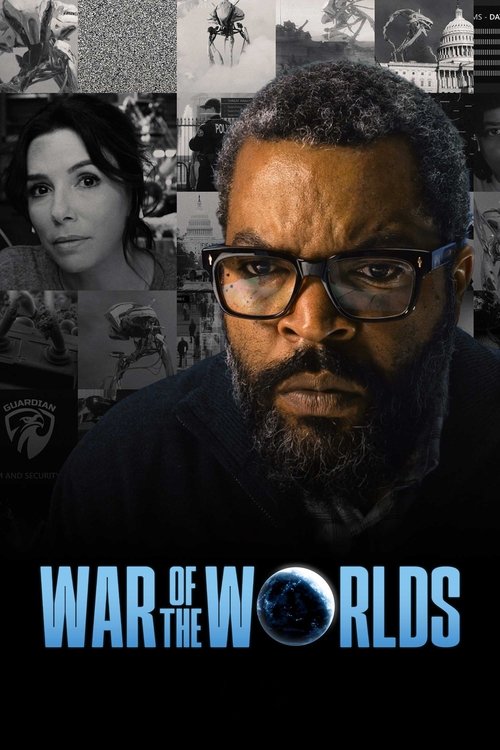
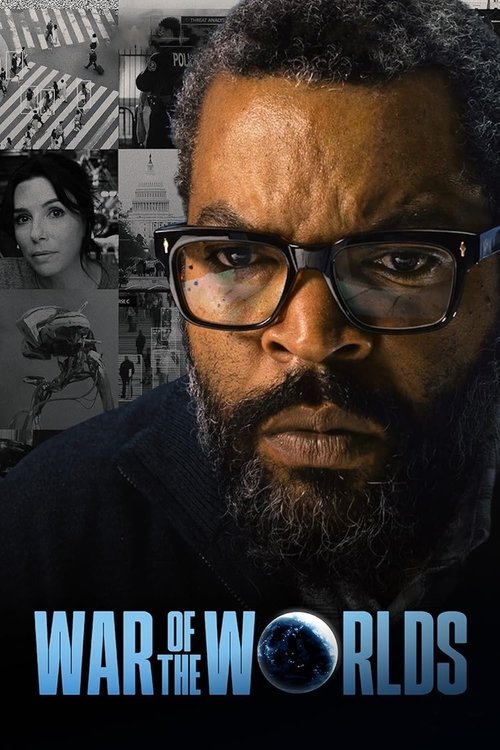
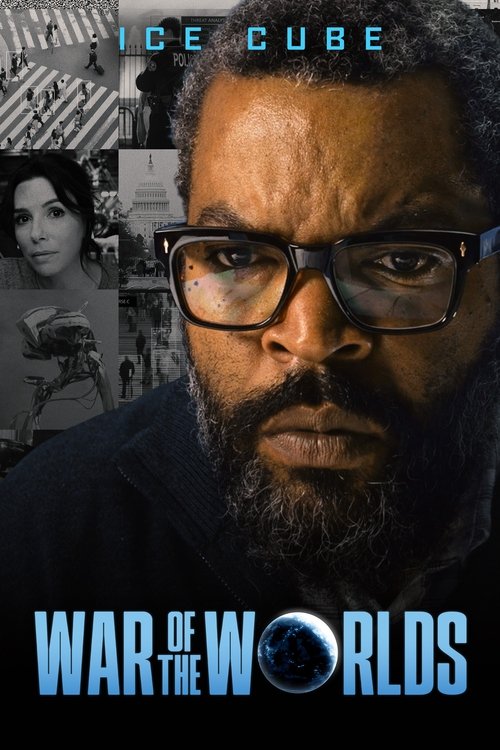
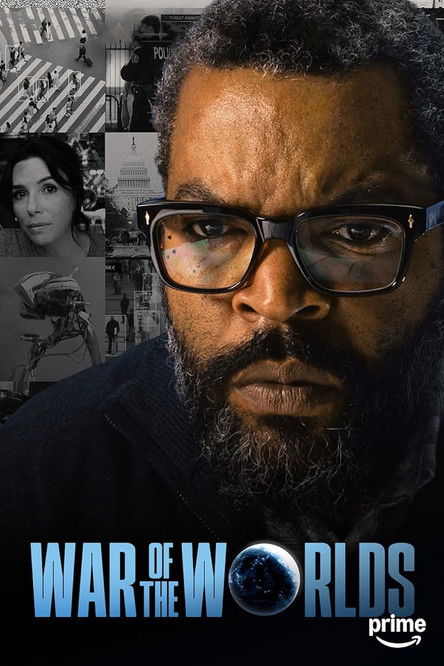
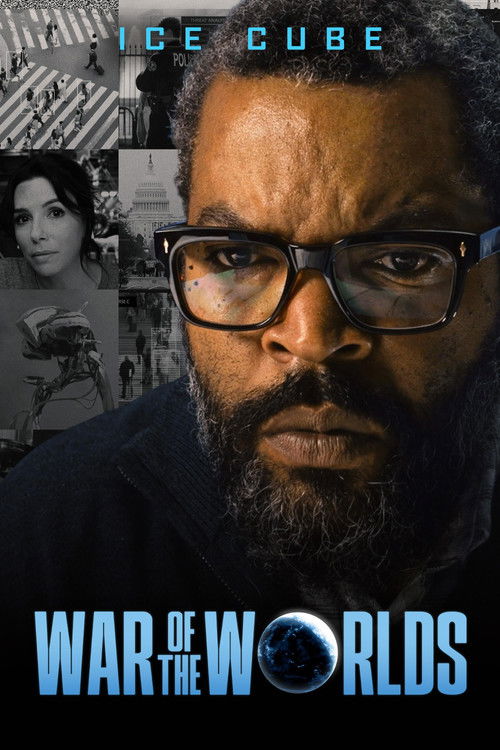
The enduring legacy of H.G. Wells' "War of the Worlds" continues to captivate filmmakers, with each generation offering a fresh interpretation of humanity's struggle against extraterrestrial invaders. The latest iteration, a 2025 cyber thriller directed by Rich Lee and produced by Timur Bekmambetov, boldly reimagines the classic narrative through the lens of modern technology and surveillance. Starring Ice Cube as Will Radford, a Homeland Security analyst, this adaptation plunges viewers into a real-time, computer-screen-centric perspective of an alien invasion that hinges on humanity's most prized commodity: data.
A Day in the Digital Trenches
The film opens on a seemingly ordinary Sunday graveyard shift for Will Radford, a top analyst for Homeland Security. This deliberate plot point explains his solitary presence in the vast office building, allowing the narrative to focus on his digital interactions. Will's workday is initially consumed by the mundane yet critical task of assisting the FBI in apprehending a notorious cyber criminal known only as "The Disruptor." Interspersed with his professional duties are personal intrusions, as Will repeatedly uses his work resources to remotely access and monitor his adult children's devices, offering unsolicited advice on healthy eating and discouraging excessive video game consumption. This paternalistic surveillance, while presented with a touch of dark humor, foreshadows the film's central themes of data privacy and government overreach.
His routine is shattered when his NASA scientist friend, Sandra (Eva Longoria), contacts him with alarming news. The peculiar atmospheric disturbances they've been observing are not natural phenomena but rather the harbingers of an alien invasion. Meteors, appearing to streak through Earth's atmosphere, are in fact sophisticated containers for the invaders' advanced weaponry. These meteors disrupt global satellite communications, plunging the world into chaos.
Driven by scientific curiosity, Sandra investigates a crash site and makes a chilling discovery: the "space rocks" are not geological formations but intricately designed vessels housing spindly, tripodal war machines. These machines swiftly emerge, unleashing devastation and initiating a full-scale assault on Earth. A stark news headline, "WE ARE UNDER ATTACK… MACHINES IN METEORS," encapsulates the sudden and terrifying reality.
Despite the immediate global threat, Will's initial response is a perfunctory security report to the President, offering a tactical observation: "They will be stronger in groups." However, his paternal instincts quickly override his professional obligations. His primary concern shifts to ensuring the safety of his children, particularly his daughter Faith, a biological research scientist who is heavily pregnant and finds herself in the path of the alien onslaught. Leveraging his formidable hacking skills, Will remotely commandeers a self-driving Tesla, programming it to navigate Faith away from the war-torn zone – a testament to his resourcefulness, and a surprising nod to the resilience of modern automotive technology in the face of extraterrestrial aggression.
The Data Drain: A New Kind of Warfare
As a global military response is rapidly mobilized, it initially appears that humanity might have the upper hand. Fighter jets swiftly neutralize the alien tripods, eliciting a triumphant reaction from Will, who exclaims, "Whoo, hell yeah! Take your intergalactic asses back home!" This moment of perceived victory, however, is short-lived.
The aliens, far from being defeated, reveal a far more insidious strategy. As the battle rages, the tripods converge on the world's data centers. Unfurling metallic tentacles, they inject these vital hubs with swarms of tiny, robotic spiders. These microscopic entities possess an alarming ability: they consume data with the voracity of mosquitoes drawing blood. Within moments, global systems begin to falter. A stark warning flashes across Will's screen: "Full data loss!"
The consequences are catastrophic. Without their critical data, military operations collapse. Aircraft, both winged and rotor-driven, fall from the sky. Oil rigs erupt in flames. In an unexplained but visually striking turn, abandoned army tanks are depicted rusting, suggesting that data loss can somehow induce rapid material decay. The invasion's impact extends to the very fabric of human connection, as personal photos, messages, and sound clips from platforms like Facebook begin to vanish. The social media giant itself succumbs, displaying a 404 error, a digital tombstone for countless memories.
The Disruptor, whose identity remains a mystery to Will, resurfaces via video call, articulating the invaders' core motivation: "Our most precious resource on earth is data. The invaders won’t stop until they have it all." This statement underscores the film's central premise: in this reimagined "War of the Worlds," the battleground is not solely physical but digital, and the ultimate prize is information.
Unmasking the Disruptor and the Deeper Conspiracy
In a twist that many viewers might have anticipated, The Disruptor is revealed to be none other than Will's son, Mark, the very child he has been so diligently monitoring. Despite his father's constant digital intrusions and lectures, Mark has maintained a clandestine identity as an Anonymous-style hacker, his true capabilities hidden in plain sight. This revelation adds a layer of familial drama to the unfolding crisis, highlighting the complex relationship between father and son, and the unintended consequences of invasive parental oversight.
The film then delves into the aliens' peculiar addiction to data, though their ultimate purpose for harvesting it remains unclear. It is revealed that these incursions are not entirely new; the aliens have engaged in smaller-scale infiltrations throughout history. Will is presented with classified government documents that suggest historical anomalies, such as the infamous Roswell incident of 1947, were in fact earlier alien attempts to gather information. This raises intriguing questions about the nature of the data the aliens sought in the nascent stages of computing – were they after punch cards, or perhaps even physical filing cabinets filled with paper records?
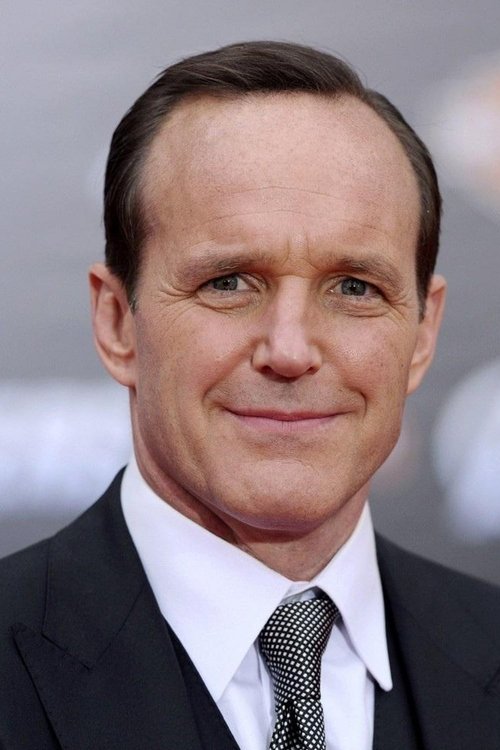
The immediate catalyst for the current, large-scale invasion is identified as "Goliath," a top-secret government surveillance program. This initiative, described by Homeland Security director Don Briggs (Clark Gregg) as possessing the "ability to predict everyone’s thoughts and movements," is presented as even more invasive than Will's own work. The sheer volume of data scraped by Goliath acts as an irresistible beacon, drawing the data-hungry aliens to Earth. Will is consumed by rage, confronting Briggs: "NASA warned you that if you sparked Goliath, you could have triggered an invasion. You risked our whole lives to spy on our Amazon carts?!" This outburst highlights the film's critique of mass surveillance, questioning the ethical implications of such pervasive data collection, especially when it potentially endangers global security.
A Hybrid Threat and an Amazonian Solution
Facing an existential threat, Will and his son Mark, along with a collective of other hackers, devise a plan to combat the invaders. When their initial strategy falters, they formulate a second, more desperate approach. Sandra's analysis of one of the alien spiders reveals a critical detail: these are not purely robotic entities but a "hybrid organism," a fusion of biological and cybernetic components, even containing DNA. Mark, drawing a parallel between biological and computer code, suggests that DNA's structure is akin to programming.
With the help of Will's daughter Faith, the team manages to re-engineer an existing vaccine, codenamed "Cannibal." The modified vaccine is designed to interact with the aliens' systems, effectively neutralizing them. However, a significant hurdle remains: how to deliver the payload to Will, who is trapped within the NSA building due to its automatic lockdown protocols.
Fortuitously, Faith's fiancé, an Amazon driver, possesses a solution. He proposes utilizing one of Amazon's Prime Air drones for the crucial delivery. In a climactic moment, with a defiant cry of "Alright, dinner time!", Will administers the vaccine (or perhaps virus) to the cyborg spiders. This action triggers a rapid cascade, overwhelming the alien invaders and bringing their data-harvesting campaign to an abrupt end. Thus, the world is saved, a victory attributed to the combined efforts of Ice Cube's character and the logistical prowess of Amazon, a modern-day deus ex machina.
Themes and Legacy
Weighing in at a brisk 90 minutes, this 2025 "War of the Worlds" offers a concise and contemporary take on Wells' classic. While the visual effects might be uneven, the core narrative echoes the 1898 novel. The aliens' appearance and behavior are reminiscent of Wells' descriptions, though their sustenance has shifted from human blood to digital data, a reflection of our hyper-connected age. Their vulnerability to pathogens, a key element in the novel, is updated to a computer virus, mirroring the thematic shift.
H.G. Wells originally intended his novel as a cautionary tale about colonialism, a powerful statement against the British Empire's expansionist policies. This 2025 adaptation appears to champion a different message: the dangers of mass surveillance, albeit with a nuanced acknowledgment of its potential utility. The film's resolution, where humanity is saved by the services of a global e-commerce giant, stands in stark contrast to Wells' socialist leanings and his likely disapproval of such hyper-capitalist solutions. This juxtaposition offers a thought-provoking commentary on contemporary society and the evolving nature of heroism and salvation in the digital age.
Top Billed Cast









Core Crew




Posters

Backdrops