- N/A
- 2h 3m
- Directed by
-
- Lu Chuan
- Writer
- Lu Chuan
- Premiered
- October 01, 2024
- Language
-
- 中文
- Status
- Released
- Revenue
- $51,706,251.00
- Country
-
- China
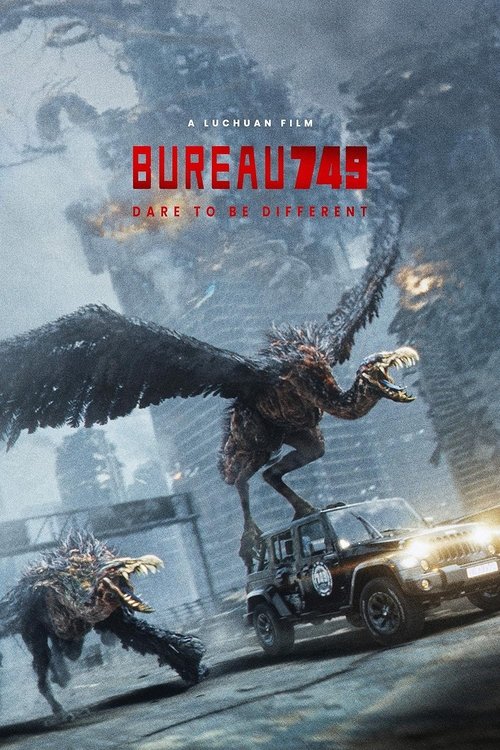
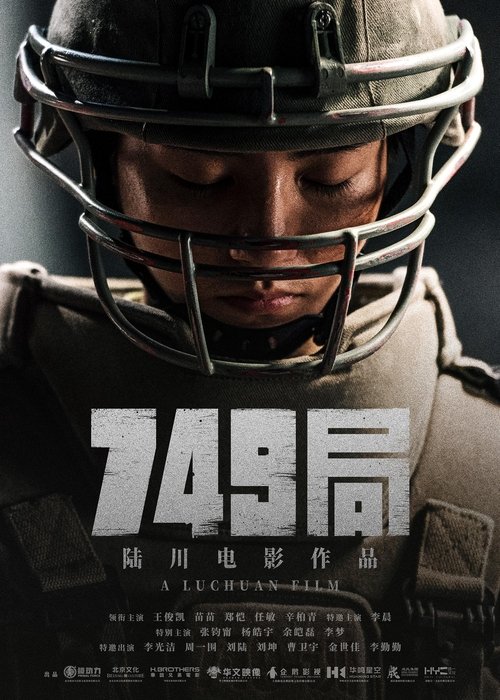
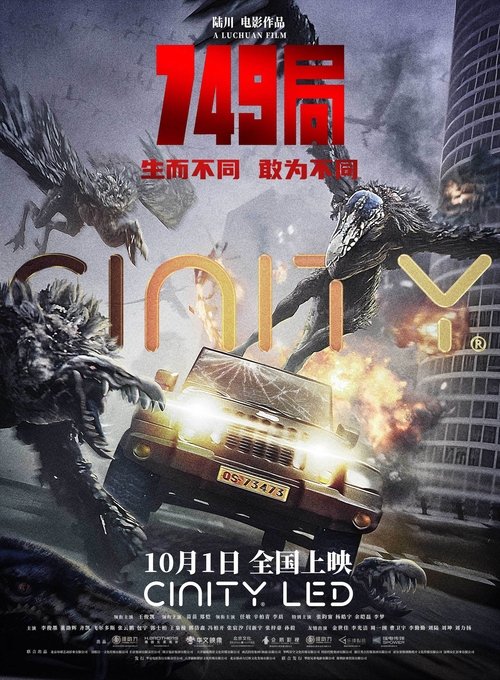
Bureau 749
- Production
-
- 华文映像影视传媒有限公司
- Huayi Brothers Pictures
- Beijing Culture
- Tencent Penguin Pictures
Spoiler
In the heart of central-south China, the city of Hongkuang was forever changed on June 5, 1992. A catastrophic mining disaster plunged the earth into darkness, claiming the lives of 47 workers. Miraculously, one miner was pulled from the wreckage, his tale of survival as extraordinary as it was unsettling. Trapped deep within the collapsed pit, he claimed to have encountered an unknown life form and unearthed the skeletal remains of something decidedly alien. This extraordinary account, coupled with the subsequent discovery of massive metallic fragments from what appeared to be an extraterrestrial craft, triggered an immediate and intense government response. The entire incident was swiftly classified, its investigation handed over to the clandestine 749 Life Sciences Research Centre, also known as Bureau 749. This formidable organization, with its network of five national centers and numerous laboratories, was tasked with unraveling the profound mysteries unearthed beneath Hongkuang.
Eight months after his rescue, the sole survivor succumbed to an unknown ailment, his pregnant wife’s unborn child exhibiting alarming developmental abnormalities. To contain the escalating situation and safeguard sensitive information, authorities made the drastic decision to seal the pit. The recovered skeleton and the enigmatic metal fragments were transported to Bureau 749’s research facility in Hongkuang for exhaustive analysis.
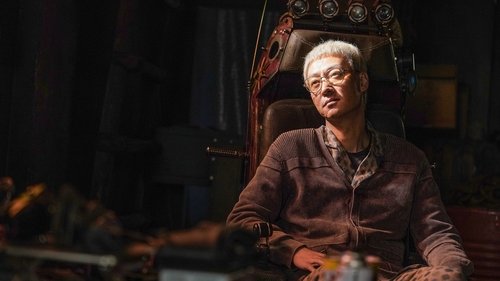
Eighteen years later, Hongkuang found itself enveloped in a peculiar, thick white mist. While official pronouncements deemed it harmless, the city’s atmosphere remained thick with an unspoken unease. It was into this environment that Cao Guojiu, a retired scientist now confined to a wheelchair, and his wife, Sun Erniang, who managed a sprawling, warehouse-like bar and disco adjacent to the now-sealed mining pit, received an anonymous email. This digital missive contained classified reports from Bureau 749, shedding light on the chilling developments that had unfolded since the initial disaster.
The reports detailed the emergence of unknown life forms in the pit’s subterranean lake. On July 12th, a Bureau 749 team collected larval samples, revealing an astonishing capacity for adaptation and survival. These organisms possessed the unsettling ability to consume all types of metal. Just three days later, on July 15th, colossal tentacles were observed breaching the water's surface. In response to this escalating threat, Bureau 749 decided to bring back the only individual with a direct connection to the 1992 incident: Ma Shan, the son of the deceased miner.
Ma Shan’s existence was as unusual as the circumstances of his conception. Born with vestigial wings on his back, he, along with other children exhibiting extraordinary abilities from that era, had been raised within the confines of Bureau 749. However, Ma Shan had ultimately rebelled against the institution, choosing a life of freedom and eventually being adopted by his uncle Cao Guojiu and Sun Erniang.
Cao Guojiu, aware of the looming danger, attempted to arrange for Ma Shan’s escape. He sought to book him a flight to Xiamen, where he could find refuge with an old army comrade. However, their plans were abruptly thwarted by the arrival of menacing figures from Bureau 749 at the bar. A desperate flight ensued, with Ma Shan and Sun Erniang narrowly escaping the clutches of the agents. A breathtaking chase through the labyrinthine streets of Hongkuang followed, culminating in Ma Shan’s desperate dash into the city’s metro system.
It was within the confines of the train that Ma Shan encountered Xia Hua, another individual with special abilities who had been raised at Bureau 749. She guided him, escorting him directly to the Bureau’s research center, a formidable complex carved into a mountain outside the city. Upon arrival, Ma Shan was met with a sardonic reception from his former peers, children he had grown up with and who had subjected him to relentless bullying during their shared time at the bureau.
Ma Shan was then brought before Qiao Dongbei, the head of the research center. Initially, Ma Shan refused to cooperate, but Qiao Dongbei’s veiled threats – leveraging accusations of tax evasion against Cao Guojiu and fabricating charges of selling counterfeit spirits against Sun Erniang – left him with little choice. He was subjected to a series of perilous agility tests in a training arena, where he was forced to confront large, metallic spheres. It was only when pushed to his absolute limit, when his suppressed powers erupted, that he managed to survive. Subsequent blood tests revealed a startling truth: Cao Guojiu had been administering regular doses of strontium to Ma Shan, a deliberate effort to inhibit his extraordinary abilities and allow him a semblance of a normal life.
The true horror of the situation began to unfold when Ma Shan was presented with one of the alien life forms in the bioscience laboratory. Through the reinforced glass, the creature communicated directly with him, its chilling message echoing, “We are your family. Together we’ll annihilate the human race, annihilate the evil virus on this planet, make this planet free. The human race is destined to be exterminated by us.” Qiao Dongbei and the lead scientist, Chen Guang, were unable to perceive this telepathic exchange, but Chen Guang later recognized that some form of communication had indeed occurred.
Utilizing Ma Shan as a test subject, Bureau 749 discovered that the massive metal fragments possessed the uncanny ability to drain the life forms’ energy, though the mechanism remained a profound mystery. Ma Shan, increasingly unwilling to be a pawn in the bureau’s scientific pursuits, found himself at a moral crossroads. Meanwhile, the top brass at Bureau 749 recognized the dwindling time they had. The life forms were on the verge of breaking free from the pit, threatening to engulf Hongkuang, then the rest of China, and ultimately, the world.
Bureau 749: A Blockbuster's Ambitious Reach Falls Short
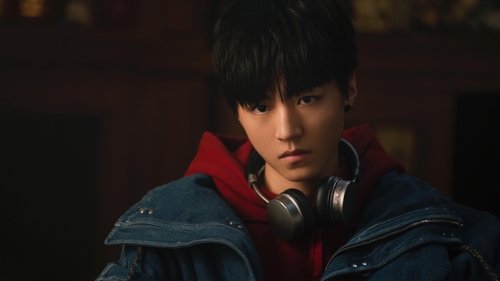
"Bureau 749," a science fiction spectacle that spent eight and a half years in development with a reported budget of RMB 600 million, aspires to be a major blockbuster. However, its potential is significantly undermined by a script that is both mediocre and conceptually muddled, further hampered by a lead actor whose performance lacks the necessary gravitas. Wang Junkai, a former boyband member then 19 years old, portrays Ma Shan, an 18-year-old with extraordinary abilities who is conscripted by the titular secret state bureau to combat extraterrestrial threats. His youthful appearance, while perhaps fitting for a character with a complex inner life, comes across as merely blandly contemporary rather than embodying the emotional and spiritual depth required. This is exacerbated by a distinct lack of chemistry with the more seasoned actors surrounding him.
Ultimately, the primary culprit for the film's shortcomings is its confused and often bewildering screenplay. The narrative direction becomes particularly lost in the latter half, devolving into a relentless barrage of visual effects featuring monsters and characters that fail to elicit any significant emotional investment from the audience. Released as a National Day attraction, "Bureau 749" underperformed commercially, grossing RMB 376 million. While this figure might be respectable for an average film, it falls far short of the RMB 1.8 billion reportedly needed to achieve profitability for such an ambitious production.
On the surface, "Bureau 749" appears to diverge significantly from the established filmography of its director and screenwriter, Lu Chuan. Now 53, Lu initially carved out a niche with a diverse and critically acclaimed career, including the black crime comedy "The Missing Gun" (2002), the Tibetan western "Kekexili: Mountain Patrol" (2004), and the profoundly moving Nanjing Massacre drama "City of Life and Death" (2009), the latter distinguished by its striking black-and-white cinematography. However, Lu has ventured into monster movie territory before, notably with "Chronicles of the Ghostly Tribe" (2015). That film also commenced with the discovery of mysterious underground skeletons, leading to the establishment of a bureau to investigate them, and culminated in a VFX-heavy confrontation with monsters six years later. "Chronicles" achieved considerable box office success, earning RMB 680 million. Following the commercial disappointment of his previous film, the costume drama "The Last Supper" (2012), Lu was likely encouraged to remain within the sci-fi and action genres. Pre-production for "Bureau 749" commenced less than six months after the release of "Chronicles." It is also noteworthy that Lu himself worked for the actual Bureau 749 for a couple of years in the early 1990s, after graduating from a military institute, before pursuing a master's degree at the Beijing Film Academy. This personal history undoubtedly fuels his fascination with the shadowy, top-secret organization.
The parallels between "Chronicles" and "Bureau 749" extend beyond their thematic similarities. Both screenplays, solely penned by Lu (who might benefit from collaboration), begin with considerable promise but ultimately lack a clear narrative trajectory. The initial 20 minutes of "Bureau 749" are undeniably engaging. The film introduces Bureau 749 amidst a backdrop of classified files detailing paranormal events, alien spacecraft, and monstrous entities. This is followed by the mining disaster, the discovery of peculiar artifacts within the pit, and the subsequent impact on the sole survivor's unborn child. Eighteen years later, the narrative shifts to Ma Shan, a brooding teenager residing with his adoptive aunt and uncle in a vast, punk-metal themed bar situated near the mining site. His life is disrupted when agents from Bureau 749 arrive, seeking his assistance with a new crisis. The ensuing chase sequence, a dizzying parkour-style pursuit across the city's rooftops, is expertly executed, as is a scene within Bureau 749 itself, where Ma Shan's latent abilities are tested against colossal metal spheres in a specialized arena. However, these impressive set pieces feel largely disconnected from the advancement of the central plot. It is only about thirty minutes into the film that the audience is fully apprised of the core conflict: that the protagonist is being compelled, against his will, to confront monstrous beings with whom he shares a profound, perhaps genetic, connection.
This central premise forms the backbone of the film for the subsequent hour and a half. Lu's screenplay struggles to maintain clarity, even within its own fantastical and scientific framework. The structure is chaotic, with fragments of character backstories interspersed sporadically. A past friendship with a female agent from Bureau 749, portrayed competently by Miao Miao (known for "Youth" and "The Best Is Yet to Come"), who also possesses special powers, is introduced but frustratingly left unresolved. Similarly, a contingent of Bureau 749 soldiers, former childhood acquaintances who once tormented Ma Shan, are barely developed as distinct individuals.
Miao Miao's real-life husband, Zheng Kai, who was 32 at the time of filming and is more commonly associated with lighthearted romantic comedies, is cast as the surprisingly youthful head of Bureau 749. He compensates for a perceived lack of physical authority with a somewhat playful approach to his role, which offers a refreshing, albeit brief, respite. The remainder of the cast commits to their roles with earnestness. This includes veteran character actor Yu Ailei in a minor role as a military trainer, Taiwanese actress Zhang Junning, who plays Ma Shan's resilient aunt, and Xin Baiqing, portraying Ma Shan's enigmatic adoptive father, heavily made up as a hippie dolphin trainer from "Water Boys." Other actors appear in underdeveloped supporting roles.
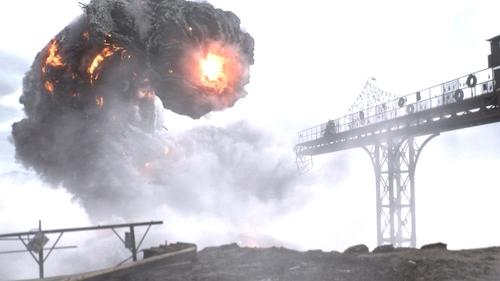
Due to the script's absence of a coherent architectural framework or compelling dramatic momentum, the action sequences in the latter half of the film feel disjointed and opportunistic. They involve characters with whom the audience has failed to establish any meaningful emotional connection. The final act, heavily reliant on visual effects, becomes increasingly preposterous and frenetic, concluding with a pseudo-poetic resolution accompanied by a well-known piece by J.S. Bach. The visual effects, while adequate, are not particularly groundbreaking. Ma Shan's angelic wings possess a somewhat derivative aesthetic, and the sight of armed soldiers engaging with giant, vulture-like avian creatures and a colossal tentacled monster offers little in the way of novelty. More original is the design of Bureau 749 itself, a vast complex excavated from a mountain, featuring interiors with an aesthetically pleasing, retro style. As is characteristic of Lu's filmmaking, the cinematography is striking, credited to Hong Wei and the UK-born David Tattersall, the latter bringing extensive experience from major American action films. The musical score by Liu Tao is conventional.
Footage accompanying the end credits chronicles the film's extensive eight-and-a-half-year production journey, involving 6,526 individuals between March 5, 2016, and September 24, 2024. The behind-the-scenes material begins with concept sketching and model creation in March 2016. Principal photography commenced in Beijing in December 2018, with reshoots occurring later in March 2024. The footage also reveals the departure of the international crew (with one exception) in late 2018 due to financial constraints. Principal photography concluded in July 2019. Lu subsequently directed commercials in 2020 and undertook other projects between 2022 and 2024 to ensure the post-production process remained financially viable during the pandemic. The film was shot in various locations, including Chongqing (where the parkour chase sequence was filmed starting in November 2018), Beijing, and Baiyin in Gansu province.
Top Billed Cast








Core Crew




Posters
Backdrops