- N/A
- 2h 10m
- Directed by
-
- Luc Besson
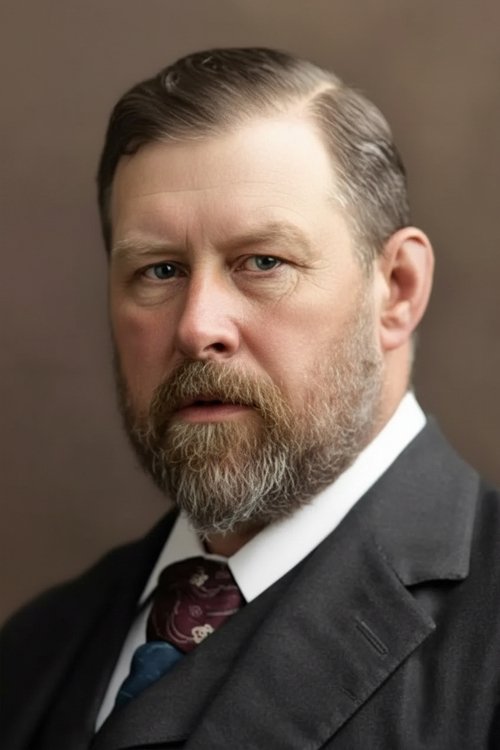
- Novel
- Bram Stoker
- Premiered
- July 30, 2025
- Language
-
- Français
- Status
- Released
- Budget
- $52,000,000.00
- Revenue
- $25,788,866.00
- Country
-
- France
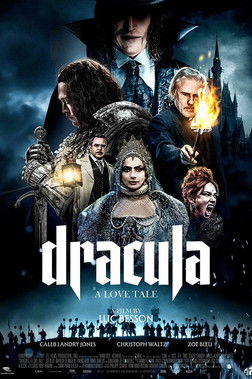
Dracula
- Production
-
- EuropaCorp
- Luc Besson Production
- TF1 Films Production
- SND
- and 2 more
Spoiler
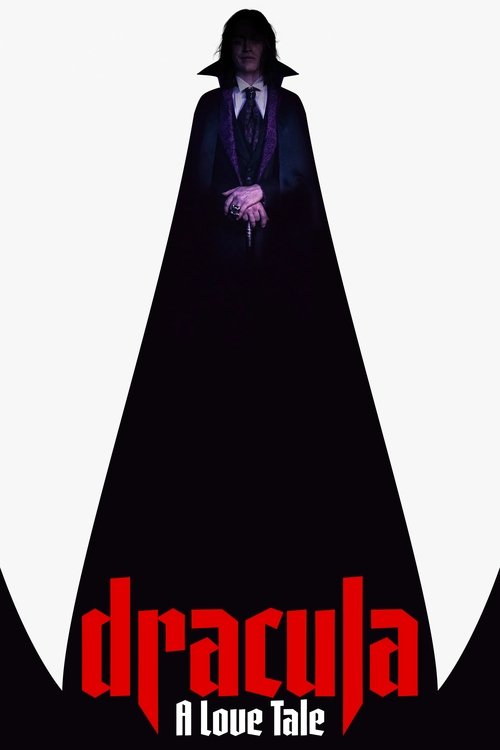
Luc Besson's "Dracula: A Love Tale" presents a profoundly reimagined Count Dracula, not as a monstrous fiend, but as a figure consumed by an agonizing, eternal loneliness. This cinematic rendition delves into the origins of the legendary vampire, tracing his transformation from a devoted Romanian prince, Vlad II, to an immortal cursed by his inability to accept the loss of his beloved wife, Elisabeta. The film paints a poignant portrait of a man whose unwavering faith shattered in the face of divine perceived abandonment, leading him down a path of vengeance and an unending existence.
The narrative begins with Vlad II, a prince deeply devoted to his wife, Elisabeta. His world revolved around her, and the prospect of life without her was unbearable. When duty called him to battle, he implored the court priest to offer prayers for Elisabeta's continued well-being. Though Vlad emerged victorious from the conflict, the triumph was short-lived. News soon reached him that Elisabeta was in grave danger, pursued by his enemies. Tragically, by the time Vlad located her, she was already mortally wounded. In a devastating twist of fate, the very sword he wielded to vanquish her attackers inadvertently inflicted the fatal blow upon her. Denied even a final farewell, Vlad was consumed by grief and a profound sense of betrayal. He blamed God for snatching Elisabeta away, his faith irrevocably broken. Having dedicated his life to serving God's purpose as a prince, he now saw divine power as capricious and uncaring. In his rage and despair, he renounced Christ and exacted vengeance upon the priest, whom he held responsible for failing to protect his wife. This act of defiance and blasphemy resulted in a divine curse: Vlad was denied the release of death, condemned to an eternity of painful existence.
Centuries later, the consequences of Vlad's curse manifest in the modern world. The film introduces Maria, one of the earliest "specimens" of vampirism to be encountered. A priest, already steeped in research concerning such phenomena, finds himself confronted with the tangible reality of vampires. Maria embodies the classic vampiric traits: she displays prominent fangs, suffers from photophobia, burning intensely under direct sunlight, and possesses the unnerving ability to ignite a crucifix with a mere glance. She is, by all accounts, the quintessential vampire. The priest, overwhelmed by his discovery, is subsequently sent to a psychiatric ward by the Vatican, tasked with investigating this "delicate case." A doctor dismisses Maria's recorded birth year of 1759 as a clerical error, given her apparent age, but the priest harbors a growing suspicion that this date might, in fact, be accurate, hinting at her extraordinary longevity.
During his interrogation of Maria, the priest uncovers a crucial piece of information: she serves a master, a prince who is actively seeking his lost princess. For four hundred years, the Church has been on a relentless quest to uncover the source of vampirism, and the priest finally feels a surge of hope. Maria was slated to marry a man named Henry William Spencer. Their wedding, eschewing a traditional church ceremony, was arranged to take place at an estate. However, the proceedings took a chaotic turn with the arrival of the bishop invited by Henry. The moment Maria laid eyes on the bishop, she became uncontrollably agitated, her behavior escalating to a point where she had to be admitted to a hospital.
The narrative then reveals a significant connection: Maria had befriended Mina, a young woman who bears an uncanny resemblance to Princess Elisabeta. Henry, Mina's fiancé, knew Jonathan, and it was through this connection that Maria was introduced to Mina. Maria, recognizing Mina's striking likeness to her master's lost love, believed she had finally succeeded in her mission to locate the princess. However, her efforts were thwarted, and Maria found herself imprisoned in the psychiatric ward, bound in chains. Later, Vlad, having escaped his own confinement, orchestrates Maria's escape. Upon her release, Maria returns to Henry, intending to bite him. Fortunately, the priest and the doctor arrive just in time to intervene, preventing further escalation. In the ensuing chaos, Jonathan, acting decisively, decapitates Mina with a sword, while the priest uses a stake to end her existence.
Jonathan, a solicitor by profession, is accustomed to traveling wherever his work dictates. This professional obligation leads him to Count Dracula's castle in Romania. He had been working at a law firm in Paris when he received the request to visit Vlad at his ancestral home. Jonathan is taken aback by Dracula's appearance upon arrival. The Count is an aged figure, his pallor stark, his nails elongated, and his teeth stained, presenting a formidable and unsettling visage. Despite his initial apprehension, Jonathan chooses to set aside appearances and focus on the business at hand. He informs Dracula that one of his properties in the heart of Paris is in a state of disrepair and inquires about the possibility of a sale. Dracula, though tempted by the prospect of satisfying his thirst, has largely retired from such pursuits, subsisting on rodents for sustenance. He defers the discussion to the following day, instructing Jonathan to remain in his assigned room under no circumstances.
However, Jonathan's inherent curiosity proves to be his undoing. That night, he ventures out to explore the castle. His exploration leads him to the dungeon, where he discovers a coffin containing a resting Dracula. Before Jonathan can fully comprehend his surroundings, Count Dracula confronts him, reminding him of his transgression in leaving his room. As a consequence of breaking the rule, Dracula declares it is time for Jonathan to die. Dracula's minions subdue Jonathan and hang him upside down. When asked for his dying wish, Jonathan cleverly requests that Dracula recount his story. Dracula, respecting the dying man's plea, begins to narrate his four-hundred-year ordeal under the curse. He speaks of his repeated, failed attempts to embrace death. Convinced that Elisabeta, a soul of purity, would inevitably be reincarnated, he had poured all his resources and energy into creating a potent perfume, an elixir designed to irresistibly seduce women in his vicinity. He traveled the globe, disseminating this perfume, and while women were invariably drawn to him, he could not find his beloved. In his mounting frustration, he eventually succumbed to his vampiric urges, using the perfume's power to quench his thirst and transform numerous innocent women into vampires. These women became his subordinates, tasked with the singular mission of locating Elisabeta for their master. Despite the immense wealth his subordinates brought him, they failed to deliver the one thing he truly desired.
Upon hearing Dracula's tragic tale of love and loss, Jonathan reveals that his own beloved awaits him at home, and their wedding is imminent. He expresses his fear that she would be devastated if she learned of his demise. Dracula is astonished when Jonathan produces a photograph of his fiancée, which he carries in a locket. Moved by this unexpected revelation, Dracula decides to spare Jonathan's life, recognizing him as the catalyst for his potential reunion with Elisabeta. He orders his minions to confine Jonathan to the dungeon while he prepares to embark on his quest to find the love of his life. Whether Jonathan's presence at the castle was a matter of fate or a calculated maneuver by Maria remains a subject of debate. Jonathan manages to escape his confinement, and though pursued by the minions, they deem the risk of traversing a frozen lake too great and abandon the chase. Jonathan successfully returns to Paris.
Meanwhile, Vlad, in his quest to regain his youth, consumes the blood of nuns from a nearby convent. He employs his magical perfume, which renders them susceptible to his influence, leading them to surrender to him willingly. Reinvigorated, Vlad travels to Paris and liberates Maria. Proud of her, he rewards her with the blood of a clerk, restoring her to her former self. Maria immediately contacts Mina. Mina is surprised by Maria's reappearance, unaware of her release from the hospital. Mina had been in communication with the priest and the doctor, who were anticipating Dracula's arrival and planning his capture. Mina, unaware of Dracula's true identity as Vlad, felt a profound sense of displacement, as if she did not belong to her era. She felt an inexplicable void, a sense that something was missing from her life. Despite Jonathan being an ideal fiancé, she found herself lacking a genuine attraction to him. Mina gradually realizes that she has been subconsciously searching for her true prince. Maria, upon visiting Mina, suggests they attend a festival, and it is there that she introduces Mina to Vlad. There is an undeniable magnetism about Vlad that makes him impossible to overlook. Later, when Vlad confesses that Mina bears a striking resemblance to his late wife, Elisabeta, Mina is unsure how to respond. A music box gifted by Vlad evokes fragmented memories of a past life, leaving Mina deeply perplexed. She reminds Vlad, and herself, that she is not the woman he seeks.
Upon Mina's return to her boarding house, she encounters the doctor, the priest, and Jonathan in the waiting area. They inform her about Dracula, his vampiric nature, his relentless search for her, and the inherent danger he poses. The priest expresses relief upon learning that Mina has not been bitten. Mina wonders if Vlad's magical perfume was responsible for her vivid recollections of a different existence. Back in her room, she plays the music box again, questioning if the potion was the cause of her elaborate visions. However, she soon discovers that the music itself has the power to momentarily transport her back to bygone times. To her astonishment, Vlad suddenly appears in her room. She implores him to leave but is too stunned to witness him leap from her balcony. Accusing him of deception, she demands an explanation. Vlad reassures her that he never used the perfume on her and proceeds to discard the potion into the fireplace, declaring it no longer necessary. He admits to consuming the blood of his victims but emphasizes that she is not among them. He insists she is Elisabeta, the woman he has sought for four hundred years, and that he would never harm her. As Vlad takes her hand and kisses her, Mina experiences a flood of memories of their happy past life together. Despite the shock, she ultimately accepts the truth: she was, in a previous existence, Elisabeta, a Romanian princess. The persistent emptiness she felt was, in fact, her heart yearning for Vlad and the warmth he represented. Mina pleads with Vlad to bite her, and he complies. By the time the priest realizes Vlad is in Mina's room, the couple has already departed for Romania.
Mina finally feels at home upon their arrival at the castle. She anticipates a new beginning with the man she has known for an eternity. However, their newfound happiness is brutally interrupted when the priest, the doctor, Henry, and Jonathan arrive with soldiers, storming the castle. Vlad single-handedly repels the invading force. Yet, the priest intervenes, changing his mind. In the climactic moments of "Dracula: A Love Tale," as Vlad holds a sword to the priest, the priest implores him to consider Mina. He argues that it would be unjust for Vlad to condemn Mina to the same cursed existence that has bound him for four centuries. Despite their profound love, Vlad understands the immense burden of eternal life and recognizes the unfairness of subjecting Elisabeta to it. Vlad asserts that he killed for God, only to be punished in the most severe manner. The priest counters that God never commanded him to kill, and that his actions were driven by personal ambition and glory. He assures Vlad that his intention in coming to the castle was to save him, and that repentance and a plea for divine salvation would release him from his curse. Vlad realizes the priest's wisdom; he cannot drag Elisabeta into the darkness that has defined his existence for so long. To facilitate her return to a mortal life, Vlad chooses to surrender himself to God. Elisabeta pleads with him not to leave, but Vlad's decision is final. He locks Elisabeta in a room and submits himself to the priest, hoping for genuine acceptance this time. The priest recites holy verses and drives a stake through Vlad's heart with a hammer. Vlad collapses, the curse broken. He transforms into an aged, withered man. Elisabeta retrieves his body and confronts him, demanding to know why he has done this to himself. In his dying breath, Vlad cups her face and whispers that he did it all for love. He dissolves into dust, and Elisabeta watches his remains dissipate from the castle.
As the priest had foreseen, the ending of "Dracula: A Love Tale" sees Vlad's victims freed from the curse. Those he and his minions had attacked and bitten regain consciousness. Elisabeta, now Mina, is also relieved of the curse and returns to her mortal form. Jonathan, having sustained injuries, hopes for a reunion with Mina, but he soon realizes she is no longer the woman he knew and relinquishes his pursuit. Though Vlad is gone, Mina's life is irrevocably altered. She is left in mourning, unable to return to her former life. It will take her years to process her experiences, and she may find solace in cherished memories of Vlad. In the final scene, a group of young boys emerges from the castle, implied to be the former minions of Vlad. Dracula had used his supernatural abilities to transform them into diminutive, monstrous servants, known as "dwergis," to guard the castle. With the lifting of the curse, they are finally free. Considering Vlad's four-hundred-year existence, his minions should have been of similar age. However, upon the curse's dissolution, they are depicted as young boys. This suggests that the monsters were perhaps Vlad's own creation, conjured from nothing rather than transformed youths, and that the lifting of the curse allowed them to evolve into mortal beings. The conclusion definitively marks the end of the vampire era. While a progression, given the devastation wrought by Vlad and his subordinates, the love story itself concludes on a tragic note.
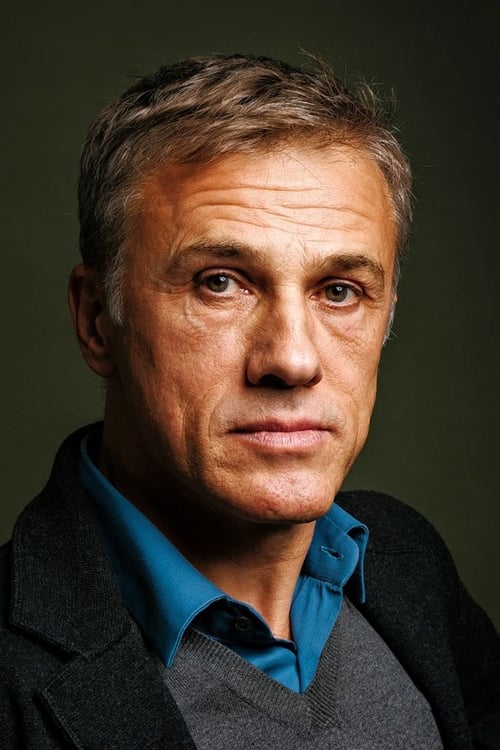
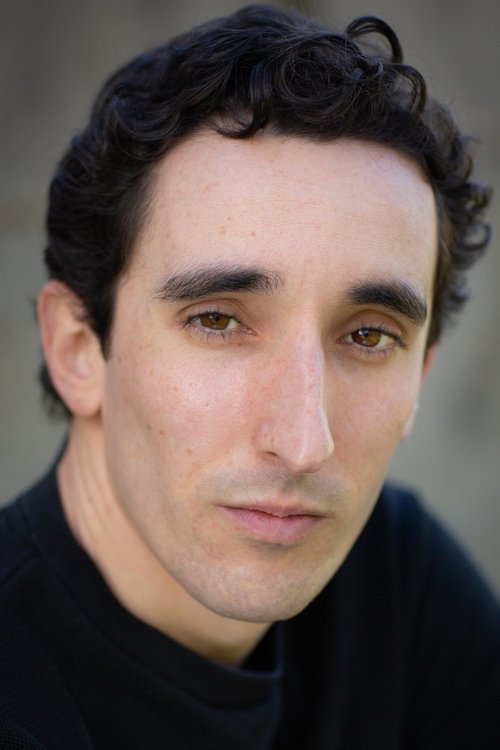
Top Billed Cast








Core Crew

Posters